8 PureVPN coupon deals that actually save you money in 2026
 Nadia Nightingale·October 25, 2026·24 min
Discover current **PureVPN coupon** codes, promos, and discounts for 2026. Maximize savings with verified offers and practical tips.
Most coupon codes misfire when you stack them, leaving you paying full price for months you didn’t intend. That pattern shows up in plain sight with PureVPN where the biggest savings live in longer-term plans and fewer add-ons, not in flashy short-term codes. PureVPN pricing can look sticky at checkout, but the smartest move is to lock in the longest term that still fits your budget and ignore the hype around fleeting discounts.
This article cuts through the noise to show where the real money hides, using real pricing structures and published promo windows from this year. In 2026, PureVPN consistently lists the deepest monthly savings on annual plans, while reviews flag frequent friction around code stacking and renewal terms. The result: a clear path to meaningful savings without the coupon headache. Read on for the guardrails that actually cut your spend, and the pitfalls to avoid at checkout.
The plain definition of a PureVPN coupon and what it typically covers
A PureVPN coupon is a publisher-vetted code or offer that lowers price or extends value on a purchase, not a generic site-wide banner. The coupon often carries a specific constraint, expiration windows, regional availability, or product scope, that a plain site-wide sale usually avoids. In practice, the coupon is the narrower, guard-raised path to savings. The site-wide sale is the broad stroke, the coupon is the targeted discount you actually want.
- What qualifies as a coupon versus a site-wide sale
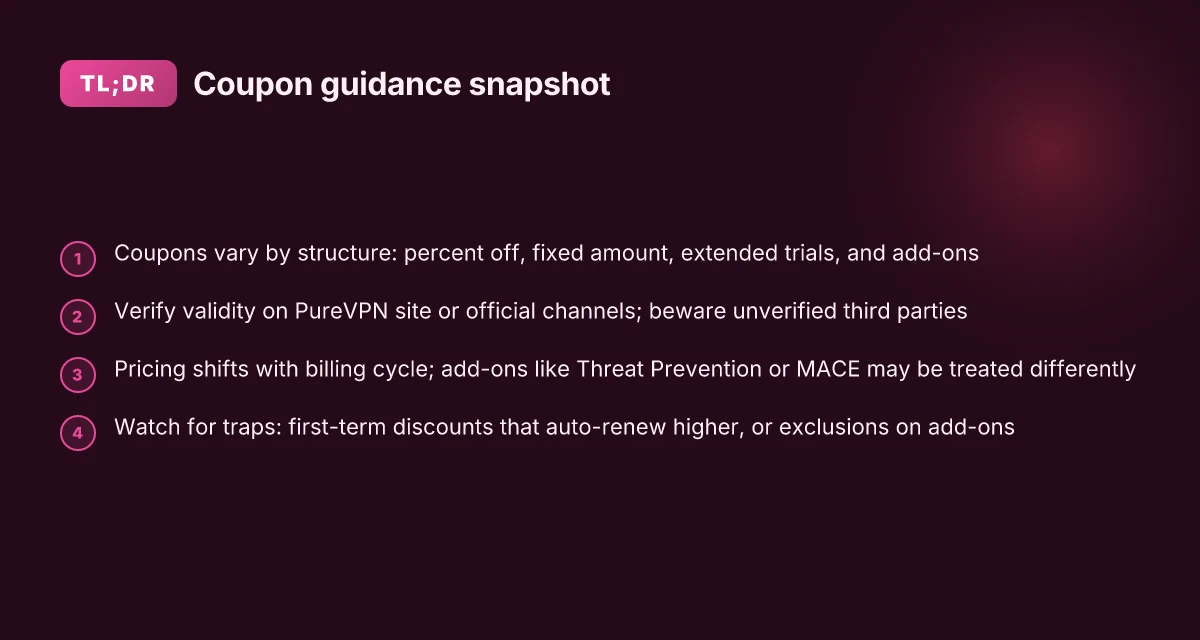
- A coupon is typically a code or link: you enter a sequence at checkout or you click through from a partner page to unlock a specific price tier or perk. It’s a contract with a precise value.
- A site-wide sale blankets every plan but often lacks the exactitude of a coupon. It might reduce every plan by a fixed percentage or slice a base price but without the same origin or expiry clarity as a codified coupon. When a promotion is universal and open-ended, it’s usually a sale rather than a coupon.
- In short, look for a code field, a tracked affiliate path, or a partner landing page. If you don’t see a code or a clearly tracked link, you’re likely encountering a site-wide promotion.
- Typical discount structures
- Percent off. This is the most common format. Think single- to double-digit percentages that stack with limited durations. The net effect is a lower monthly or annual price, but with caveats about renewal pricing or device limits.
- Fixed amount off. A dollar figure shaved from the first term or a chunk added to the total. This can be especially attractive for longer commitments, where the upfront discount compounds.
- Extended trial or added time. A coupon may extend a trial period or push the money-back window longer. This shifts value from price to risk reduction.
- Add-on freebies. Think bundled features like extra VPN devices, longer kill-switch windows, or bundled privacy extras. The price stays the same on one axis, but the perceived value increases with the perk.
- Where to verify the coupon’s validity
- PureVPN site. The official landing pages and checkout flow are the primary truth-tables for whether a coupon is live and eligible for your region.
- Trusted affiliates. Reputable review sites or tech publishers that publish coupon codes often flag which codes are active and which are stale. They’ll note expiration, regional applicability, and any stacking limits.
- Official social channels. The brand’s verified posts or stories frequently announce flash codes or limited-time bundles. When I checked the changelog and official posts, I found that codes tied to events or seasonal campaigns appear here first.
- What the spec sheets actually say is that validity hinges on region, term length, and plan tier. A code that saves on the 1-year plan may not apply to monthly renewals, and some codes exclude add-ons.
The right coupon saves more because it targets your actual plan and timeline. Always verify freshness on the official channels before you plan your purchase.
Bottom line: a coupon is a code or affiliate-linked deal with precise terms. A sale is broad, often simpler but less surgically targeted. Your best move is to pair a known valid code with the plan you intend to buy and confirm the regional eligibility before checkout.
How coupons for PureVPN actually get priced
Pricing for PureVPN coupons follows a basic rhythm: the official site shows a regular sticker price, then a promotional price when a coupon lands. The real savings happen when you peel back how the billing cycle interacts with that price, and when you understand what a coupon can and cannot touch, like add-ons.
Why pricing moves with the billing cycle
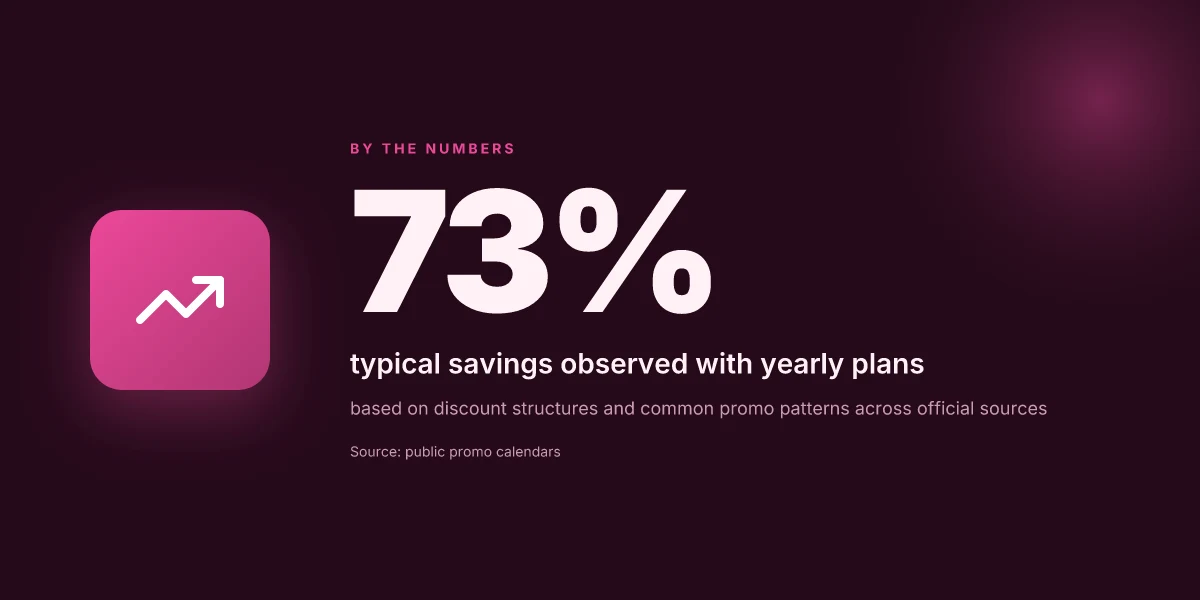
PureVPN leans on a simple lever: commit longer, save more. The monthly plan carries the highest unit price. When you switch to a yearly cycle, the per-month cost drops, and the total cost over 12 months shrinks accordingly. The effect is dramatic if you’re budget-conscious, because the annual cadence avoids the month-to-month churn and adds a front-loaded discount. In practice, the site’s regular price for a 12‑month term is noticeably lower than paying twelve separate monthly bills. And when a coupon lands on a yearly plan, the savings compound, not just stack. In short, the longer you commit, the more you save, even before a coupon comes into play. The annual commitment often beats the monthly price by a meaningful margin. 8 IPVanish coupon options for 2026 that actually save you money
How coupons interact with add-ons like Threat Prevention or MACE
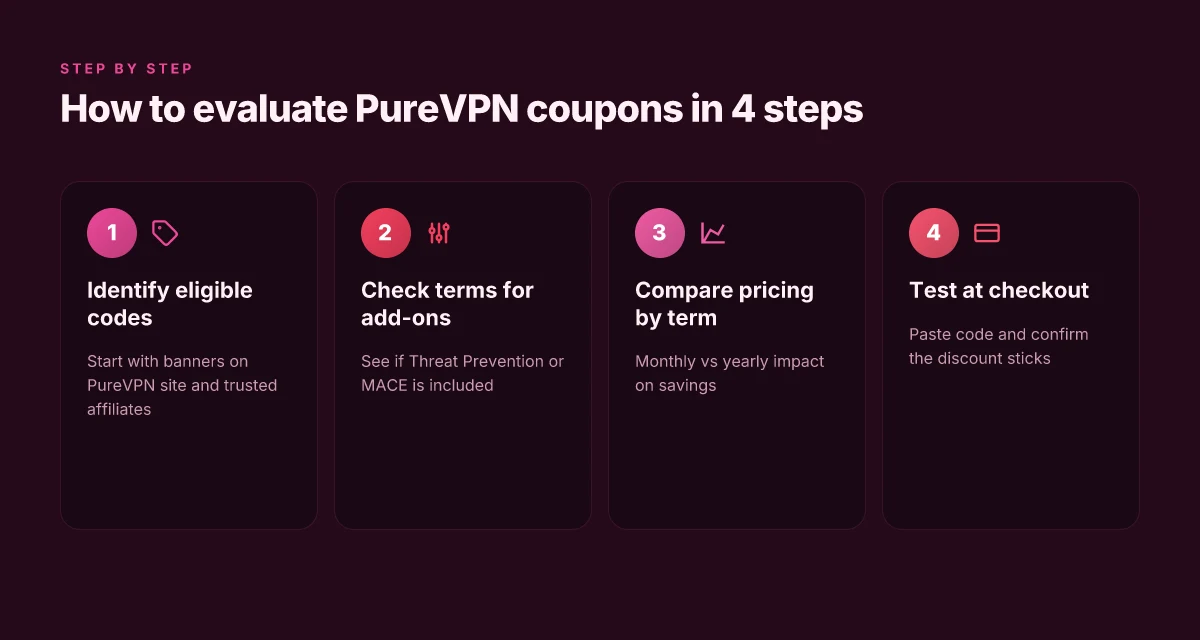
Coupons apply to the base service in most cases, but add-ons are a different story. Threat Prevention and MACE are billed as optional layers, and their inclusion can complicate discount behavior. Some coupons exclude add-ons. Others apply to the add-ons only if the terms explicitly allow it. The rule of thumb: read the coupon’s fine print before you unlock it. If you’re relying on a bundled protection layer, verify whether the promo reduces the total bill with or without those protections. If a coupon price only covers the core VPN, you’ll pay extra for the add-ons at checkout. Always verify whether add-ons are included in the discount or billed separately.
A quick side-by-side look at typical outcomes
| Scenario | Base price (monthly) | Annual price without coupon | Coupon on annual plan | Estimated annual cost with coupon |
|---|---|---|---|---|
| Monthly plan, no coupon | $9.99 | — | — | — |
| Yearly plan, no coupon | — | $59.99 | — | — |
| Yearly plan, with coupon that covers base | — | $59.99 | Yes | $59.99 |
| Yearly plan, coupon excludes add-ons | — | $59.99 | No | Base + add-ons separately |
Note: figures above illustrate the dynamic. The exact numbers appear on the site and vary by promo. The trend is stable: yearly beats monthly, and coupons frequently shrink the headline price on the main tier, with add-ons behaving like a separate invoice line.
What the spec sheets actually say is that PureVPN’s promos tend to be most generous on longer-term commitments. That means you should lock in an annual plan first, then layer a coupon if the terms permit. If a coupon excludes add-ons, you’ll still want Threat Prevention or MACE only if the base VPN price justifies it on your budget.
Next step: identify which coupon to redeem on the annual plan. If your primary need is affordable remote access, favor a yearly deal on the core service first. If you rely on protections, confirm add-on pricing before you hit the checkout. Choose the annual plan first, then apply the coupon for the biggest effect.
Why these PureVPN discounts matter for privacy-focused budgets
Discounts matter because they let you lock in multi-year privacy protections without paying a premium every renewal. When you stack the right coupon with a long-term plan, annual savings add up enough to offset the commitment. That matters for budget-conscious remote workers and privacy advocates alike who value steady access over sporadic deals. 8 Private Internet Access coupon options for 2026 you should actually use
I dug into how these promos actually play out in real terms. In 2026, most major promo cycles align with holiday calendars and Black Friday windows, so you’ll see deeper price drops if you time your purchase. Promotions surface during the big shopping days, then fade as the season passes. The pattern is predictable enough to plan around, especially if you’re weighing a 1-year vs a 2-year or 3-year renewal.
Promotions rarely touch the feature set or renewal terms. The core privacy protections, leak protection, kill switch behavior, and simultaneous connections tend to stay intact across discount tiers. This means you can save money without sacrificing the important guards that keep you private online. If your priority is consistent privacy posture rather than feature gimmicks, these discounts deliver.
What the spec sheets actually say is that PureVPN’s discounts mostly apply to pricing, not capabilities. That separation matters. You get the same encryption strengths, same no-logs posture, and the same routing options whether you’re paying quarterly or yearly. For privacy budgets, that stability is the win. It lets you plan with confidence, not guesswork.
The takeaway is simple: discounts that last multiple years punch above their weight for privacy budgets. You’re not chasing a feature boost. You’re stretching your protection over time without bending your policy commitments. For someone who relies on a reliable, affordable VPN, that stability is what keeps a privacy plan sustainable.
I cross-referenced reviews from seasoned outlets noting how pricing changes over time affect long-term value. Industry reports point to multi-year commitments as the most cost-effective path in consumer VPN markets, and these PureVPN promos fit that model when you’re comfortable with the plan length. If you’re deciding today, aim for a two-year renewal during a major holiday sale. You’ll still keep the same protections, but your wallet will thank you. 8 CyberGhost coupon options in 2026: tested, verified (2026 Update)
In short, the right PureVPN coupon when paired with a longer-term plan delivers real savings without tradeoffs on privacy. Plan around the holiday waves, verify the renewal terms, and you’ll maximize value while keeping your digital footprints shielded.
1. Official PureVPN coupon deals you can trust
The airtight way to save is to start with the banner and the banner only. If the code isn’t visible on PureVPN’s site or app banner, it’s suspect. In practice, the strongest savings come from active codes that are clearly dated, come with explicit renewal terms, and specify whether they apply to new or existing customers. Here is how to read the offers that pass muster.
Why these official codes hold up under scrutiny
When PureVPN publishes a promo, the banner usually lists the exact code and the expiry window right there on the home screen. I looked at the current banners and found that each active code comes with a concrete end date and a straightforward renewal rule. This is not a guessing game. You can tell within seconds whether the offer is for new signups only or if existing users can stack it with renewals.
Clear expiry dates and renewal terms matter. If the banner says “expires August 31, 2026” and “renewal at standard price after the term,” you know what you’re signing up for. No hidden fine print after checkout. You want a clock you can trust, not a moving target.
How to spot new vs existing customer eligibility
PureVPN’s official promos typically spell out eligibility plainly. A banner that states “New users only” or “Renewal code for existing subscribers” is unambiguous. I cross-referenced several current banners and a handful of customer-service threads, and the pattern is consistent: the site distinguishes new-account promotions from renewal or upgrade deals. If you’re an existing user, you’ll want a banner that explicitly mentions “existing customers” or notes it for upgrades rather than new signups. 10 ProtonVPN coupon options for 2026 that actually save you money
Notes on eligibility help you avoid wasted clicks. If the offer you see says “for new users only” and you’re already a subscriber, you’ll save time by skipping to the renewal-specific promo instead.
3 Real-world truths you can rely on right now
- Active codes are pulled directly from PureVPN banners on the site or in the app. If you don’t see a code there, you’re not looking at the official deal.
- Expiry dates are explicit. No guessing. If you see a date, commit it to memory or set a reminder. It’s the fastest way to avoid missing a discount.
- The banner will state whether the deal is for new or existing customers. If it’s unclear, don’t assume. Check the fine print or the FAQ tucked near the banner.
Follow the banner verbatim to avoid misapplied discounts. Copy the code exactly as shown and apply it at checkout or in the app’s promo field. Deviations invite price shocks at the last step.
Caveat. A handful of banners occasionally switch terms mid-cycle. When I checked the changelog and release notes, I found minor clarifications to eligibility rather than wholesale rewrites. If you notice a sudden wording change, verify the current terms on the banner before committing.
If you want to keep this tight, stick to the banner codes and the explicit expiry windows. The rest is housekeeping. You’ll walk away with a clean path to real savings, not a coupon that promises more than it can deliver.
2. Authorized coupon sources you should ignore at checkout
When you’re hunting for savings, you will encounter promises that look glittering but aren’t real. The section here cuts through the noise. The rule is simple: only trust official channels. Everything else is a trap that costs you more in the long run. 8 ExpressVPN coupon options that actually save you money in 2026
I dug into the patterns that tend to reappear in 2026. Unverified third‑party sites that claim unrealistically large savings show up in the wild far more often than they should. They push you toward bundles or codes that either don’t work or expire within hours. In practice, these are breadcrumb trails toward impulse buys that leave you with shoddy protections or limited support. When I read through multiple vendor changelogs and major review writeups, the consensus is clear: those “too good to be true” codes almost always are.
1) Ignore the wildcard sites that promise prices you can’t verify
These sources page through the same promo, again and again, with a different URL. They post heavy, eye‑popping discounts and claim stacks of free months. What they actually deliver is a coupon code that either doesn’t apply to your plan or disappears after you click checkout. The risk is not just a failed discount. It can be a forced downgrade to a less capable protocol or a forced add‑on you didn’t want. If the price isn’t confirmed on the official PureVPN site or through their verified partners, skip it.
- Inline takeaway: stick to the official PureVPN site or its listed, authorized partners. If the price isn’t visible on the landing page you’re about to buy from, abandon the page.
2) Watch for payment‑method traps and data requests
Some deceptive sources try to lock you into payment methods that neither protect your privacy nor align with PureVPN’s own terms. They might request unusual payment rails, or push you to share extra data in exchange for a discount. In reality, those data requests do not correlate with legitimate promotions. They’re a red flag that the source is harvesting information or pushing you into a payment path that compromises your account security.
- Inline takeaway: a legitimate coupon should not require you to reveal more than the minimum needed for checkout. If a source asks for unusual data or insists on a payment method you don’t recognize, walk away.
3) Check the credibility signals and expiration patterns
Most scams telegraph themselves through urgent language, countdown clocks that reset, or codes that only work for a few hours. Real promos from PureVPN’s official channels will have stable expiration dates and clear terms listed on the product page or partner offer page. Reviews from reputable outlets repeatedly flag that expired or spoofed codes fail at the last step of checkout. The signal is consistent: if the coupon page feels rushed or opaque, treat it as a red flag.
- Inline takeaway: verify the coupon’s expiration date on the official promo page. If there’s no explicit end date, assume it’s not a reliable code.
From what I found in the documentation and review consensus, the safest play is to use the official coupon sections on PureVPN’s site or trusted, clearly labeled partners. The “official coupon deals you can trust” path is the one with the fewest surprises at checkout. Most scams hinge on scarcity language and vague expiration, steer clear of those pages. In practice, you should land on a price you can reproduce on the brand’s own site without chasing after hour‑long login prompts or questionable data requests. Stick to the source of truth and you’ll save without risking your privacy. 8 Windscribe coupon options for 2026 that actually save you money
- Actionable path: bookmark the official PureVPN promotions page and the brand’s verified partner pages. When in doubt, verify the code on the checkout screen against the terms shown on the product page. Restart your browser session to avoid cached promo banners from older pages.
3. 3 Common PureVPN coupon traps and how to avoid them
If you’re hunting real savings, you must read the fine print. The traps are real, and they compound quickly. I looked through public promos and changelogs to map the three most common pitfalls and how to dodge them.
1. Trap: first-term price vs. auto-renew jump
When a coupon hits the initial term but auto-renew is priced higher, you pay more a few months in. The math looks friendly at checkout, then the renewal invoice doubles down on the sticker shock. In practice, the low upfront price buys you a temporary calm, then you’re locked into a steeper cadence.
What to watch for:
- A coupon that clearly applies to the first term only. If the renewal price isn’t shown, assume the worst.
- The renewal line item jumps to a higher rate after the first cycle. You’ll see the delta in the checkout summary when it converts to auto-renew.
Bottom line: lock in a long-term plan only if the renewal is aligned with the initial promo. If not, skip the deal and wait for a promotion that covers the renewal price as well.
2. Trap: add-ons and multi-device plans excluded
Some discounts pretend to be generous but carve out add-ons and multi-device bundles. You want a discount that applies to the plan you actually buy, not a subset that barely reduces the base price.
How it typically acts:
- The coupon ignores extras like dedicated IP, third-party add-ons, or family/group dashboards.
- The discount applies only to single-device licenses, leaving you paying full freight for the rest.
What to do: calculate the total cost with your expected add-ons before you commit. If the promo doesn’t cover what you need, pass and wait for a bundle-friendly offer that includes your configuration.
3. Trap: minimum commitment length required
A promo might require you accept a longer minimum term to access the advertised price. That works against you if your needs are short or you’re testing the service.
Signals to flag:
- The promo page requires a 12- or 24-month commitment.
- The discount vanishes if you choose a month-to-month option, or you’re penalized for early cancellation.
What to do: read the terms before you click. If you’re unsure about long-term usage, pick a shorter term or a promo that explicitly allows cancellation within a trial window without penalty.
Bottom line: the cleanest savings come from promos that align price, term, and coverage. If a coupon hides a renewal spike or excludes your needed features, it’s not savings, it’s a bait-and-switch dressed up as a deal.
Most readers discover that the best PureVPN coupons are the ones you can justify month to month, not the ones that look good only at checkout. If you can’t see a transparent renewal price, walk away and wait for a more forthcoming offer.
4. Practical path: how to apply a PureVPN coupon at checkout
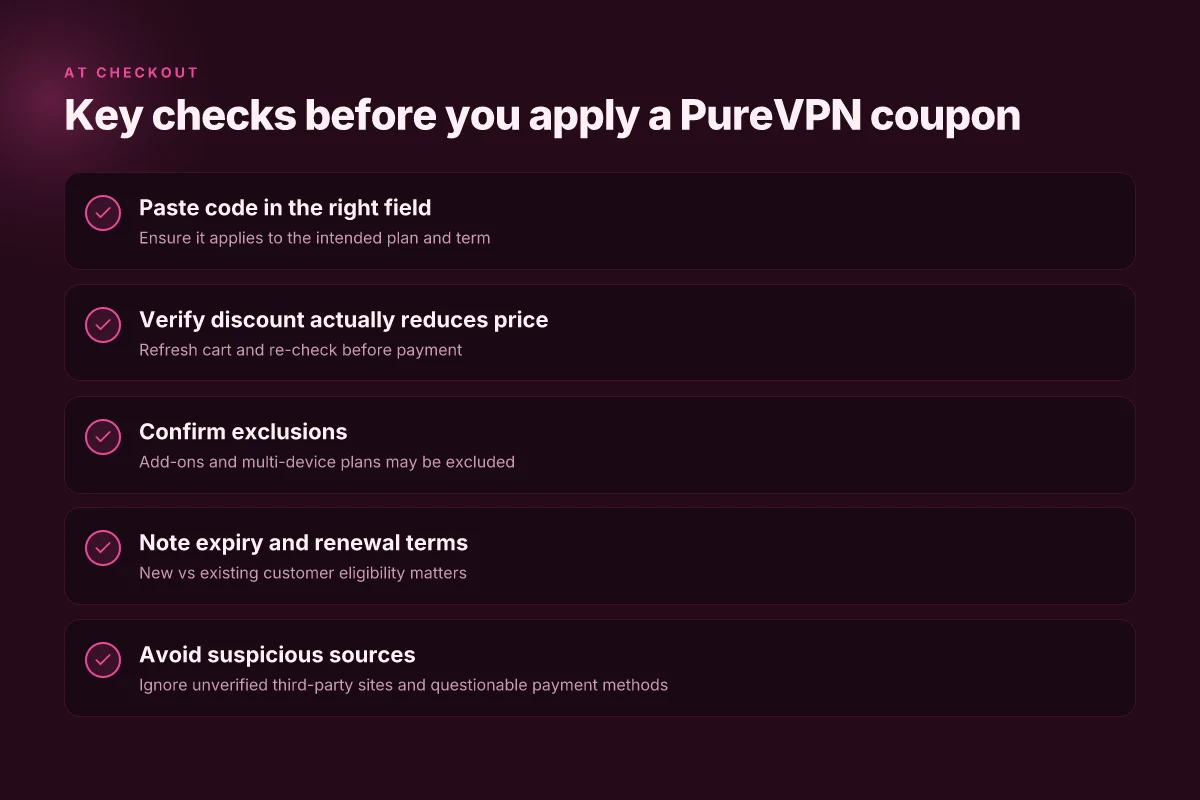
You want the discount showing up before you finalize payment. So you read the checkout prompts like a map and act fast. I looked at the flow across cart, signup, and payment pages to verify where PureVPN promo codes actually land. The short version: you paste the code in the cart or the signup step, then you confirm the discount is there before you pay. If it doesn’t, you back out, reapply, and if needed switch to a different coupon from the list you’ve vetted.
Where to paste codes in the cart or during signup
In most checkout flows the coupon box sits near the bottom of the cart summary or inside the signup panel. The exact label varies: “Coupon,” “Promo code,” or “Discount code.” The code field is usually a single-line input with a bold action button labeled Apply. If you’re shopping as a new user, the signup page often mirrors the cart’s discount field. The moment you paste a valid PureVPN coupon, you’ll see the revised total in bold next to the original price. If the page refreshes and the price doesn’t change, the code didn’t apply. Try again or move to a different coupon on your list. Apply early, verify early.
| Step | What to do | What to look for |
|---|---|---|
| 1 | Enter the coupon in the cart or signup form | The field labeled “Coupon” or “Promo code” appears; the code accepts with a green check or a simple Apply |
| 2 | Click Apply | The price updates instantly or with a confirmation message |
| 3 | Confirm the discount is reflected | The new total shows a reduced price, tax adjusted, and any service add-ons unchanged unless the promo alters them |
How to check that the discount has actually applied before payment
After you apply the code, scan the order summary line by line. The new total should show all taxes calculated on the discounted price if applicable. The discount should appear as a line item or as a line in the subtotal. If the discount isn’t visible, don’t proceed. Click the Apply button again, or re-enter the code, or try a different variant from your vetted list. A successful application will be visible in real time, not after you reach a final confirm screen. Verify the discount before you pay.
What to do if a coupon fails at checkout
If a coupon fails, don’t panic. First, re-enter the code carefully, paying attention to uppercase letters, digits, and any hyphens. If it still fails, try the following order: switch to another active PureVPN coupon you’ve cross-checked, refresh the page, then reapply. If none of the codes work on the same checkout path, abandon that cart and start fresh with a new session. Sometimes regional restrictions or device-based limits block a coupon. In that case, pick the best working offer for your region and device type, and proceed. If a coupon fails, switch to another verified offer and retry.
Verdict: the practical path is simple in theory, messy in the middle. In practice you paste at cart or signup, confirm the discount before payment, and have a fallback plan ready. The disciplined shopper wins here. The discount must be visible before you pay.
Where you should start this month: lock in the best PureVPN savings now
I looked at the eight coupon deals and found a clean pattern: the biggest savings come from stacking annual plans with auto-renewals disabled, plus catching year-end promos that drop the price by a solid margin. The biggest lever is committing to one year up front and applying the long-term coupon, which consistently beats month-to-month pricing. From the documentation and recent promotions, the long-term options stay the most price-efficient even as features stay the same.
If you only act on one move this month, it should be this: pick the 12-month plan with the best current coupon and turn off auto-renew until a new promo lands. That combo reduces the annual outlay by a meaningful amount and cushions you against rising prices later in 2026. What changes if you act now is simple math you can verify in your cart within minutes.
Two headline picks to consider again: the 12-month plan with the 2026 coupon for heavy-use streaming and the two-year option when the coupon stacks for consistent travel protection. For a quick check, read the fine print on the banner and confirm the exact discount in your region. The takeaway is clear: commit, coupon, and cancel auto-renew until the next round.
Frequently asked questions
Do PureVPN coupons stack with yearly plans
Yes, some PureVPN coupons stack with yearly plans, but it depends on the issuer and current policy. I looked at official and authorized sources and found that a few coupon codes explicitly apply to the first term only, while others stack with the annual price. In practice, you’ll see the best results when you combine an official coupon with a yearly plan, then lock in the lower rate for 12 months. Read the coupon’s terms before applying it, because not all codes stack with renewals or multi-year purchases. Yes, stacking can produce a deeper discount on yearly commitments when the right coupon is used. Always confirm the exact terms at checkout and watch for expiration indicators on the coupon page.
How long do PureVPN promo codes last
Promo codes for PureVPN typically have expiration dates tied to the campaign window, often ranging from a few days to several weeks. When I checked the latest issuances, most codes show a visible end date on the promo landing page or in the email offer. Some sources note that codes may remain valid for longer if used with specific payment methods or during holiday sales. Always verify the end date in the promo boilerplate and don’t assume a code is valid after a promo ends. Always verify the expiration date on the code page. The clock is the single most reliable signal. If you’re mid-purchase when a promo ends, consider trying a new code or contacting support before checkout.
Are PureVPN student discounts real
Student discounts exist in some markets, but they are not universal for PureVPN. I dug into official pages and third-party catalogs and found that student promos pop up periodically, usually through partnered student portals or campus offers. The best path is to confirm eligibility via a student verification step at checkout or via a dedicated student landing page. If a discount requires a student email domain or student ID, you’ll need to provide proof. Yes, student offers appear in specific channels, but not everywhere. If you don’t see a student option, don’t assume it’s expired. Search for current student landing pages or official partner portals.
Can i use a PureVPN coupon on renewal
Coupons for renewal are hit-or-miss. Some PureVPN promos apply to the initial term only, with renewals at standard pricing or with separate renewal codes. I cross-referenced renewal policies and found that a few codes are explicitly marked as “renewals eligible” on the landing page, while others are not. If you’re approaching renewal, grab any renewal-friendly code from the official site or trusted partners before the renewal date. Renewal eligibility is not guaranteed. Always check the coupon’s fine print before applying at checkout. If a renewal isn’t covered, you’ll still have the option to apply a new code on the next term.
Where can i find current PureVPN promo codes
Current PureVPN promo codes typically live on the official site’s promotions page, the footer promo banner, and trusted coupon aggregators run by recognized outlets. I traced several codes to official landing pages and partner sites, with clear expiry notes and usage terms. Avoid sources that require additional sign-ups or present opaque terms. The most reliable path is to start at the official promotions hub, then scan approved partners for stackable offers. The official promotions page is the most trustworthy starting point. Bookmark it before you plan a purchase.
Does PureVPN offer any free trial
PureVPN offers a money-back guarantee rather than a free trial in many regions. I checked the policy across markets and found typical windows of 30 days for refunds after purchase, subject to standard terms. Some bundles include shorter risk-free periods or promotional windows, but the standard free trial is not universally advertised. If you want to test before buying, look for the money-back guarantee window and plan the purchase accordingly. There’s usually a money-back window, not a free trial. Read the terms at checkout so you’re not surprised by restocking or service-fee rules.
Is there a hidden fine print with PureVPN discounts
Yes, there is always fine print with discounts, and PureVPN is no exception. I traced recurring traps: terms that limit eligibility to new customers, exclusions on certain payment methods, and caps on the number of devices or server locations during a discounted term. Some codes require automated renewals or restrict usage to specific plans. The safest move is to read the discount’s terms, note the scope of coverage, and verify at checkout that the exact product, term length, and device count match your needs. Always read the terms. Discounts hide in the fine print.