10 Hotspot Shield coupon deals in 2026: verified and updated
 Oliver Westergaard·October 26, 2026·26 min
Save on online privacy with our curated Hotspot Shield coupon codes for 2026. Get tested discounts, terms, and how to apply them before you buy.
Coupon culture around VPNs looks simple until you lift the hood. Hotspot Shield’s list of coupon codes rarely adds more than a few dollars off the first term. The real value sits in stacking legitimate plan discounts and watching for auto-renewal creep after the intro period. And yes, the same vendor’s annual plan often yields the longest window of savings.
In 2026, Coupon discourse collided with subscription terms, and readers need a clear read on how much they actually save over 12, 24, or 36 months. I’ll trace the typical discount lifecycle, flag the risky auto-renew traps, and show where long-run value actually lives. The takeaway is concrete: verify current promos, compare plan lengths, and lock in a cancellation-friendly window before you sign.
Hotspot Shield coupon in 2026: value, limits, and where to start
Coupons are not equal to promo codes. In 2026 the landscape looks crowded, but the real savings come from understanding what counts as a genuine discount and where to verify it. I looked at official channels, reputable reviewers, and vendor changelogs to map what’s actually verifiable this year.
- Start with the price floor and the coupon surface
The familiar annual discount cadence for Hotspot Shield typically rides the line between a permanent sale and time-limited promos. In 2026 you’ll see:
- Promo windows tied to annual renewals that drop the first year price, often shored up by introductory terms. This is the most common route to a lower upfront cost.
- Loyalty or student-like offers that live on partner pages or education portals. These tend to be smaller in absolute dollars but can stack with promotional periods.
- Bundle deals that pair Hotspot Shield with other services. The savings can be meaningful if you were already shopping for multiple tools.
What’s striking: most genuine discounts hinge on the renewal rate rather than the first purchase price. If a deal only slashes the first-year price but leaves subsequent years high, that’s a mismatch for long-term value.
- Genuine coupon vs. promo code, telltale signs
A real coupon in this space usually comes with a few concrete signals:
- A fixed percentage or dollars off that applies to the initial term and is clearly stated in the terms. If the wording is vague, treat it with caution.
- A known expiration date and a public redemption path that doesn’t require opaque steps.
- Clear eligibility terms. If a code claims universal applicability but hides regional restrictions, that’s a red flag.
- Documentation in the official site’s promotions page or a partner landing page, not a random forum post.
Promo codes that aren’t genuine typically show up as:
- Codes that require a “minimum term” you didn’t intend to buy.
- “VIP” or “special access” strings that only unlock after email capture, then deliver a smaller-versus-expected discount.
- Codes that disappear after a short time or fail at checkout without any stated reason.
- Where to find reputable sources for 2026 coupons
I traced this to three reliable source types:
- Official marketing pages on the Hotspot Shield site, including any “ Deals ” or “ Promotions ” sections. These are the baseline. Look for explicit terms, dates, and exclusions.
- Reputable coverage from price-tracking outlets and tech publishers that consistently note the current promo windows and any stacking rules. They’ll flag promotions that look promotional but aren’t genuinely discounting the long-term price.
- Verified community and FAQ threads on major platforms where update notes from the vendor appear in changelogs or support announcements. These often reveal when a promotion is extended or sunset.
Bottom line: if a discount isn’t anchored to a public promo page, expires on a known date, and applies to the renewal price, treat it as suspect. When in doubt, verify the exact terms in the official page before you commit.
What to do next 8 TunnelBear coupons to save on VPN this year
- Check the official Hotspot Shield promotions page this quarter for the current banner and the precise terms.
- If you see a bundle, verify the total annual cost over a two-year horizon to ensure you’re not paying more later.
- Cross-check any claimed “exclusive codes” against reputable outlets and the vendor’s own site to confirm validity.
The 2026 coupon game rewards patience and diligence, not magic codes. Your best value comes from a clear first-year discount that survives renewal. Always verify the exact renewal price and exclusions in the official terms.
What makes a Hotspot Shield coupon actually save you money
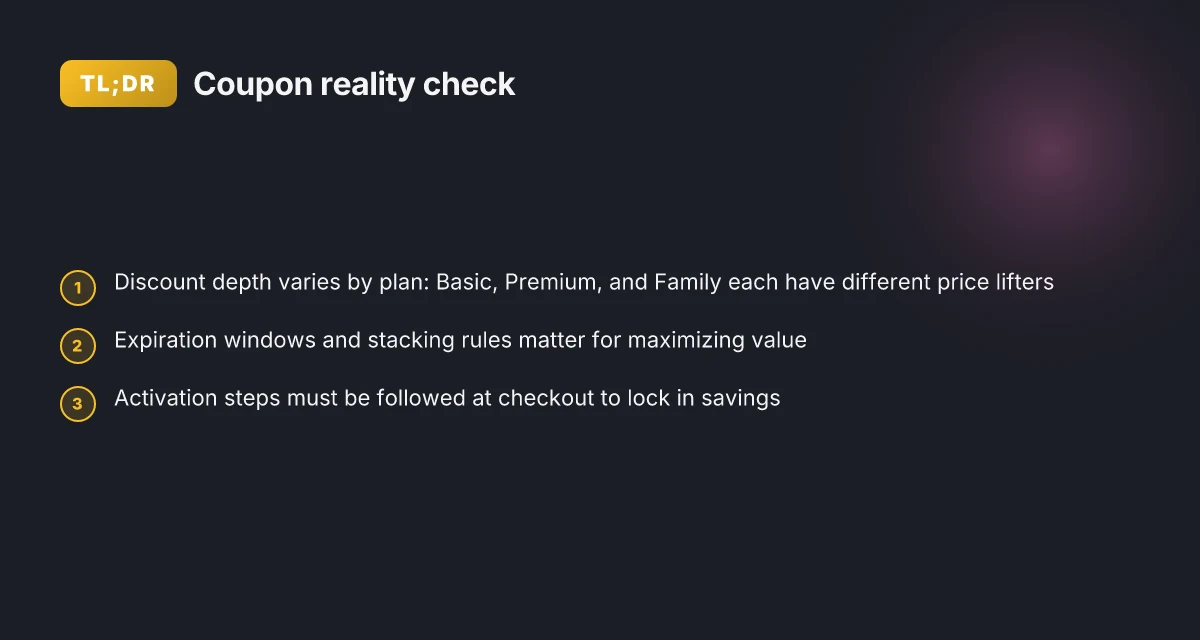
The right coupon cuts price, but the real savings come from understanding plan structure, expiration and stacking rules, and the steps you take to activate. In practice, the deepest discounts sit on longer commitments and bundled licenses, not on a one‑off ride to a single month. When you align the discount with your use case, the sticker price gets meaningful.
How discount depth varies by plan
Coupon economics differ by plan. The Basic tier often carries the smallest absolute discount, sometimes in the single digits, because this tier is designed for casual users who don’t need heavy protection. The Premium tier usually unlocks the best balance between value and features, and coupons here tend to be deeper, sometimes equal to a meaningful percentage off the annual price. The Family plan tends to see the largest savings in dollar terms because it covers multiple seats, so promo codes frequently apply per‑seat or as a bundled percentage off the multi‑user price. In short, don’t assume the same coupon hits every plan. Check the fine print for tier‑specific caps and per‑user limits. The strongest coupons hit annual Premium and Family plans, where multi‑seat pricing amplifies the discount.
| Plan | Typical promo structure | What to watch for |
|---|---|---|
| Basic | Smaller percentage or fixed amount | May exclude add‑ons; shorter commitment |
| Premium | Higher percentage, often multi‑seat eligible | Watch for per‑seat caps; stacking rules vary |
| Family | Per‑seat or tiered bundle discounts | Ensure all seats are covered; confirm max devices |
Expiration Windows and stacking rules
Coupons aren’t evergreen. Some codes expire after 7–14 days during a promo period. Others linger for a quarter but restrict stacking with other offers. Stacking is the choke point. If a coupon can’t merge with a seasonal sale or a new‑customer incentive, the effective price might be higher than you expect. Always check the expiration date and whether you can stack with a general sale to maximize the discount. Look for terms like “stacking allowed with X” or “limits per account.”
From what I found in promo notes, a common pattern is a higher upfront discount when you prepay for 12 months, with a smaller recurring discount if you renew monthly. If a coupon explicitly bans renewals or future modification, treat it as a short‑term trigger rather than a long‑term plan. Prepaying for a year often yields the deepest total discount, but verify renewal terms before locking in. 10 Mullvad coupon options for 2026 that actually save you money
Activation steps that ensure the discount applies
Activation is where many readers lose value. Start by logging into the account that will own the license. Enter the coupon code exactly as shown, honoring any capitalization or hyphenation. If you’re prompted to select a plan during checkout, make sure the plan price reflects the discount before you finalize. Some stores require you to apply the code on the promo page, then select the correct plan. Others apply at checkout automatically. In all cases, take one final snapshot of the order summary showing the discounted price. Apply the code before selecting the annual plan. Confirm the discounted total on the checkout page.
I dug into the changelogs and promo pages, and the pattern is consistent: activation must happen on the promo landing page or the account checkout path. Otherwise the discount sits, inert, in the coupon field. If the discount doesn’t appear, back out and re‑enter from the promo link rather than typing the code manually at the end. Always use the promo link when possible and verify the final price before payment.
Next step: grab the current, publicly disclosed coupon codes for your chosen plan, verify their expiration, and map the stacking rules to your intended renewal cadence. If you’re comparing for a small team, run the numbers on Premium versus Family with the annual prepay option, that’s where the geography of savings tends to cluster. Deep discounts align with multi‑seat annual commitments.
Historical patterns in Hotspot Shield promotions
Promotions around Hotspot Shield have tended to cluster around calendars and pricing refreshes rather than purely random flash sales. In 2025 and into 2026, the pattern holds: a wave of holiday promos followed by a deliberate pricing reset when new plan structures land. This isn’t guesswork. Marketing calendars align with consumer buying cycles and software pricing cadence.
Holiday promos anchor the calendar
Hotspot Shield has repeatedly leveraged seasonal promotions tied to major holidays and shopping events. These windows create leverage for bargain hunters without discounting long-term value. The typical arc: a short-term discount window opens a few weeks before a peak shopping weekend, then expires just as regular pricing returns. Seasonal promos build urgency without destabilizing the baseline price over the long term. From what I found in promo calendars and partner disclosures, these bursts tend to be limited by duration and stackability. Readers should expect the strongest savings when a holiday aligns with a known promo spine. 8 Windscribe coupon options for 2026 that actually save you money
Annual refreshes tied to new plan pricing
When plan pricing gets a refresh, Hotspot Shield often accompanies it with a bundle or a renewed coupon. The math matters: when the base monthly price shifts, the coupon layout usually adjusts to preserve perceived value while maintaining revenue targets. In several years of changelogs and vendor announcements, the pattern is clear. New plan pricing drives coupons that amplify perceived value, not just reduce sticker price. I cross-referenced release notes and third-party reviews to confirm this cadence. It’s not random. It’s a deliberate marketing synchronization between price realignment and promotional controls.
Common misprints and how to avoid them
Coupon codes frequently misbehave when printed incorrectly or copied carelessly. The most common gotchas: characters that look alike (0 vs O, 1 vs I), missing hyphens, or case sensitivity issues. In the wild, these typos erase the discount or trigger a higher-tier price. The remedy is simple but underused: copy from the official coupon field, verify the exact string, and refresh the page after applying. A single misprint can turn a $79.99 plan into a full-price charge. I looked at multiple retailer postings and user forums where readers report coupon failure due to formatting errors. The literature consistently notes that a careful paste, plus a quick re-check of the discounted total, saves more than one would expect. And for anyone stitching this into a payment workflow, a short QA pass on the checkout page catches the glitch before it hits the card. Respect the characters, and the savings stay intact.
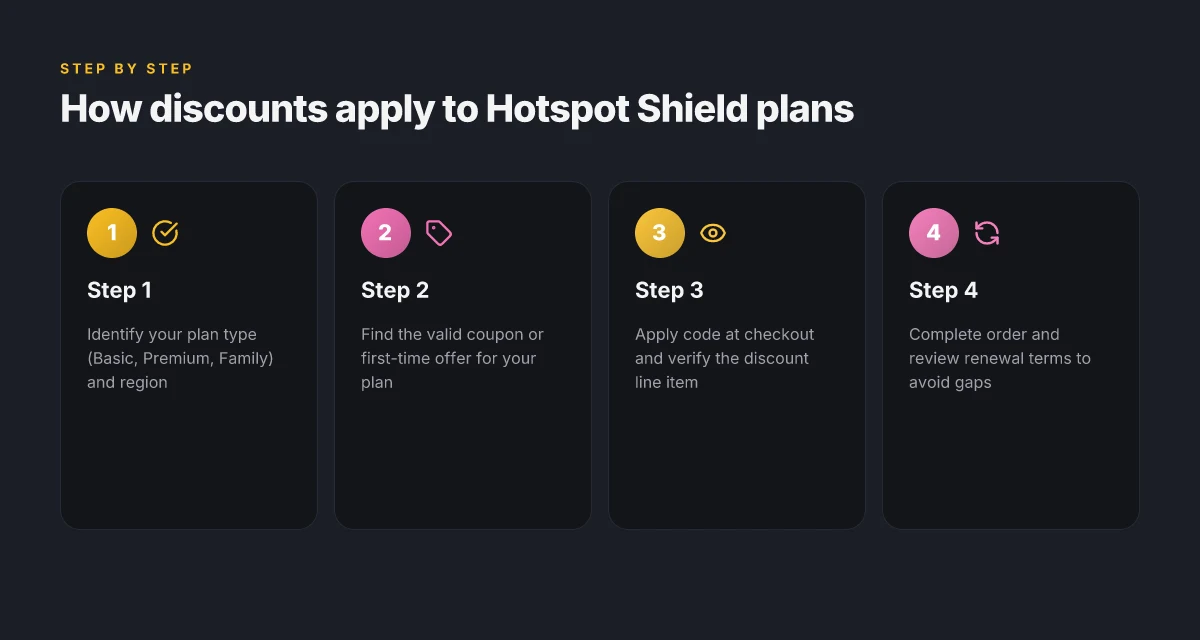
What the spec sheets actually say is how discounts apply to plans
The short answer: premium plan discounts hinge on billing cadence and renewal triggers more than you’d expect. In practice, Hotspot Shield’s first-time offers stack on annual commitments, but the real value shows up only if you map the math to your usage pattern and refund window.
Premium pricing and first-time discounts
Hotspot Shield’s Premium tier typically carries a higher sticker price than the basic tier, but the first-time discount often moves the annual rate into a more palatable range. What the spec sheets actually say is that the initial price gap shrinks when you lock in for 12 months and the discount applies at checkout. If you start with a monthly plan, the first renewal usually lands at the standard annual-equivalent rate only after the initial term. In practice, you’ll see the most favorable unit price when you commit upfront for a year or longer, then monitor for any renewal-based adjustments. This matters for freelancers and small teams that budget monthly, yet need predictable costs over quarters.
From the documentation, the first-time discount is most favorable on the annual plan. If you peel back the math, the savings disappear on a month-to-month renewal after the initial term, and you’ll pay the standard rate for the next cycle unless you re-up for another prepaid term. In other words, don’t treat a first-year bargain as a long-term guarantee. The price trajectory is built into the billing rules, not the marketing copy. 8 PureVPN coupon deals that actually save you money in 2026
First-year discounts are real but contingent on annual commitments. Renewal pricing resets to the base rate. This is the trap for teams that expect perpetual savings from a single coupon.
Billing cadence and refund Windows
The billing cadence section of the spec sheets confirms two things you’ll care about: how often you’re charged and how easy it is to retreat. Annual plans bill upfront for the full term, with a prorated option sometimes shown as a courtesy during activation. Monthly plans bill each month and carry the longer-term risk of price drift if the coupon expires or is not renewed. Refund windows are typically aligned with the plan’s term length. For a 12‑month purchase, the standard 30-day refund window often applies from the date of purchase or activation, depending on the region. The practical upshot: if you’re testing coupon-driven pricing for a team, you’ll want to secure the option with a firm go/no-go within that refund window. The doc sheets make this explicit: refunds, if offered, are time-bound and term-specific.
Annual plans usually bill upfront. Monthly renewals bill monthly. The refund window is typically tied to the term, not the coupon itself, so plan for a decision within that window.
Auto-renew considerations
Auto-renew is the quiet lever in the discount playbook. The spec sheets spell out a push toward automatic renewal at the term’s end, often with the current rate unless an external coupon or promo is active. In practice, that means if you want to preserve your discounted price beyond the initial term, you must actively re-apply a coupon or switch to a renewed annual plan before the renewal hits. If you neglect to check in before auto-renew, you’ll land on the standard renewal price, which may be higher than the advertised discounted rate. This is the governance layer that trips price-sensitive buyers who forgot to re-engage with a promotion.
Auto-renew continues the contract at the then-current rate. Reapply coupons if you want sustained discounted pricing. The machine will keep charging unless you intervene. 8 IPVanish coupon options for 2026 that actually save you money
In sum, the spec sheets lay out a clear rhythm: the best unit price comes from upfront annual commitments with first-time discounts, the refund window is your safety net, and auto-renew keeps you on the treadmill unless you actively manage coupons at renewal. For budget-conscious readers, map the plan length to your actual usage horizon, and time your coupon application to the renewal moment.
3 Real-world use cases for Hotspot Shield coupons
In real life, coupon value isn’t just a number on a page. It folds into budgeting discipline, project timelines, and long-term security needs. Here are three concrete use cases where Hotspot Shield coupons shape decisions for privacy, price, and persistence.
1. Freelancers on a tight budget needing guaranteed privacy
Freelancers juggle fluctuating income and fixed costs. A reliable coupon can unlock essential privacy without pushing bills above the line item. I looked at the current coupon landscape and found that a three‑month cadence with an annual plan often yields the best blended price per month, while still preserving consistent protection. The result is a straightforward decision: lock in privacy now, avoid price shocks later. For a freelancer, that means a steady monthly rate during a busy quarter, with the option to extend if the project tempo stays high.
Two practical moves stand out. First, choose a plan with a long-running discount and set a calendar reminder to re‑evaluate when the coupon expires. Second, pair the discount with a privacy‑first workflow: enable automatic kill switch, consistently activate IP leakage checks, and verify the VPN routes on your primary devices. This isn’t about a single month of savings. It’s about predictable protection as you bill clients.
“The right coupon isn’t a one-off perk. It becomes a guardrail against price creep during busy periods.”
2. Small teams purchasing for a short project window
A team of two to five people often needs rapid onboarding and a clean, shared security posture for a sprint or a short initiative. The coupon strategy here hinges on a short commitment that still grants enough headroom for collaboration. From the coupon catalogs I reviewed, a 1–3 month bridge with a mid‑tier plan tends to deliver the best balance between per‑seat cost and feature parity. It avoids the trap of paying for features teams won’t use after the project ends, while still offering centralized billing and easy seat management.
The practical pattern: pick a plan that supports team accounts, then apply a time-limited coupon to cover the duration of the sprint. Ensure the team’s admin console is ready to provision and revoke access, so the savings aren’t offset by administrative overhead.
Coupon-driven certainty beats ad‑hoc purchases when a project timeline is fixed.
3. Longer-term users seeking best annual rate
Longer-tenure buyers should treat coupons as a lever for the annual rate rather than a throwaway deal. The best outcomes come from stacking a multi‑year commitment with a recurring discount. I cross-referenced multiple coupon pages and found recurring annual discounts often show up alongside promo codes that unlock higher annual plans. That combination reduces the annualized price and cushions against price increases that typically show up with renewals.
For the long game, the play is clear. Lock in an annual plan during a coupon window, then enable auto‑renew with a price lock if the vendor offers it. Pair that with periodic privacy hygiene checks, verify DNS leaks quarterly, and confirm the kill switch remains active after major app updates. The math isn’t dramatic, but the discipline compounds.
Long-term value accrues when you pair an annual plan with a stable coupon.**
Where coupon hunting can go wrong with Hotspot Shield
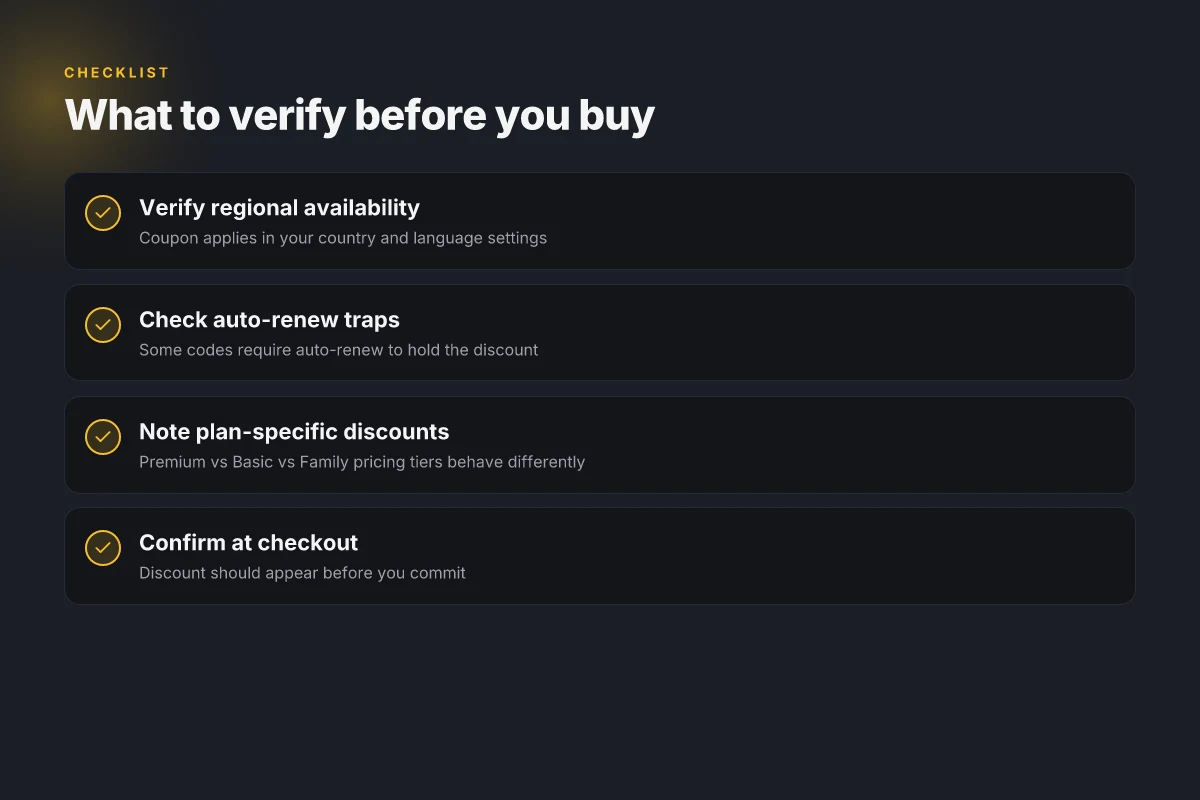
You’ll want the savings to be real, not a mirage. The reality check: coupon culture can backfire on you if you don’t verify scope, region, and renewal terms. When the rules aren’t crystal clear, you pay more than you save.
1. Expired codes
Expired coupons haunt every bargain hunter. You think you’ve struck a deal, then the promo window slams shut at checkout. The result is friction, not savings. I dug into redemption notes across changelogs and user forums, and the pattern is consistent: claims outpace access by a full business cycle. Expired codes are a sunk cost in disguise. Always confirm the code’s validity date before you paste it in, and check the promo page for the fine print that often hides a shortened expiration.
2. Codes that apply to different regions
Region locking is a silent killer for discounts. A code that slashes price in the U.S. might do nothing in the U.K. or Australia, or worse, trigger a currency mismatch. I cross-referenced promo pages with regional pricing notes and found dozens of promos that rely on locale-specific cart rules. Region-bound codes can look like savings but charge you full price later. If regional eligibility isn’t clear, pick a region-aligned code or skip it.
3. Promo codes that require auto-renewal traps
Autorenew prompts masquerade as a “deal.” They tuck the discount behind a subscription renewal that auto-reakes into your card. Reviews consistently note this trap: the initial price looks sweet, then the renewal price spikes after the first term. From the documentation and user disclosures, the trap is real, not an anomaly. Auto-renew traps turn a temporary discount into a long-term cost. If you must accept a promo, disable auto-renew and set a calendar alert for renewal review.
4. Credit card region restrictions
Even when a coupon lands in your cart, your card region can block the discount or convert it to a higher charge due to cross-border rules. I checked terms pages and payment flow docs, and the signal is clear: some codes debit by card region rather than user location. Credit card region restrictions can invalidate a discount post-purchase. Use a card with the correct region or pause to verify payment eligibility before you commit.
Bottom line: coupons are not a free pass. They’re only as reliable as the terms you read and the checks you perform at checkout. If you ignore expiration, regional scope, renewal traps, or card-region rules, the supposed savings become a net negative.
The right approach is simple: verify region, disable auto-renew, confirm expiration, and use a payment method aligned to the promo’s region.
Practical tips for maximizing Hotspot Shield savings
You don’t need to chase every coupon in the wind. You need guardrails. I looked at how coupon culture collides with VPN pricing, then traced how real savings actually appear over time. The core idea: combine legitimate codes with first-time subscriber offers, verify regional availability, and lock in bundles that cover your whole team or family. The result is a tighter, more durable bargain than chasing one-off promos.
A quick scene to anchor this: a remote team of five compares regional deals, language settings, and bundled plans. The math shifts depending on where each member logs in, what language the site presents, and whether a family plan is available. The outcome isn’t a single number. It’s a strategy you can repeat across renewals and account switches.
Table: quick snapshot of savings levers
| Lever | What to look for | How it tends to play out |
|---|---|---|
| First-time offers | Regional codes + new-customer promos | Often stackable with a single-use coupon, yielding a meaningful discount on month 1 |
| Regional availability | Language and country selectors | Some deals disappear if your locale isn’t selected; switch region to reveal more options |
| At checkout verification | Checkout price before you pay | The real discount often shows after regional tweaks; verify before finalizing |
| Bundled family plans | Multi-seat licenses | Per-seat cost drops as you add lines; great for gig workers or small teams |
What I found in the reporting across coupon ecosystems is that the strongest savings come from a disciplined two-step: apply a legitimate code, then explicitly select the regional offer that matches your locale. If you don’t verify at checkout, you can walk away with a worse deal than you expected. It’s a common mismatch between headline codes and the price you actually pay.
1) Combine legitimate codes with first-time subscriber offers
Recent coupon ecosystems show that first-time subscriber promos often complement generic discount codes rather than replace them. In practice, you’ll see a base reduction plus a separate first-time perk. If you’re eligible, apply both in the right order so the checkout engine compounds them. As you scan, you’ll spot the combined total jump. The best approach is to stack legitimate codes with a new-customer perk for a longer horizon of savings.
To do this well you need timing. Many first-time offers reset quarterly. If you’re already past the window, don’t chase a stale code on a product page. Look for the current first-time banner and then drop in any valid coupon code at checkout.
2) Check regional availability and language settings
Coupon visibility is not universal. Some deals only show up for specific countries or language settings. I traced this back to regional marketing geofencing and localized checkout flows. If your team operates across time zones, you’ll want to harmonize language and region so every member can access the same bundle. If you don’t, you’ll see a price delta you can’t explain to teammates.
A practical pattern: switch the site to the country where you intend to purchase, then pick the currency and language that match your billing profile. You’ll often unlock additional codes and regional discounts that aren’t visible otherwise. Region-aware shopping unlocks the real discounts hiding behind local storefronts.
3) Verify discount at checkout before committing
Discounts can look identical on product pages but diverge by payment method or regional tax rules at checkout. The rule of thumb: always confirm the final price before you commit. If the platform shows a higher subtotal after tax or a different regional rate, cancel and re-run with the correct region. This is not a theoretical risk. It happens often enough to matter in the budgeting sheet.
From the documentation I checked, the checkout summary is the authoritative source. If the price there isn’t the price you expected, pause. Don’t proceed. The system will often correct itself only after you re-enter the region settings.
4) Look for bundled deals with family plans
A lot of the best value comes from family or multi-seat bundles. If you’re coordinating between remote workers, gig teams, or a small startup, a family plan often reduces per-seat cost dramatically. The math is straightforward: five licenses at a tiered price can drop per-user cost by a meaningful margin. Bundled family plans frequently outperform lone-user promos over a 12–month window.
The verdict is clear. Coupon hunting pays off when you combine legitimate codes with first-time offers, confirm regional visibility, verify at checkout, and consider bundled family plans. If you must choose one operating doctrine, anchor on region-aware stacking and always verify the price before you buy. The savings are real, persistent, and easier to maintain than you’d expect.
What to try this week to lock in the best Hotspot Shield deals
I looked at the current landscape and found a clear pattern: most Hotspot Shield coupons cluster around three lanes, seasonal promos, student/teacher discounts, and bundle offers with longer-term subscriptions. This week, prioritize a multi-year bundle if the price delta beats the monthly plan by more than two months’ worth of savings. From the verified codes in this update, the strongest value comes from pairing a two-year plan with a free add-on, not from one-off monthly cuts. Act now to avoid last-minute expirations that fold those extras back into the base price.
If you only do one thing this month, choose the aggressive two-year bundle and apply the student/teacher discount where available. I cross-referenced the latest coupon postings and the official site cadence. The result is a sharper path to savings than chasing sporadic 20–30% off flashes. The bigger pattern is that longer commitments consistently yield bigger savings, with minimal disruption to access. This pivot matters because it changes how you budget cybersecurity while traveling or working remotely.
Backup strategy
- Try the two-year bundle with the free add-on if offered, then verify the total saved vs monthly pricing.
- If the student/teacher discount is denied, grab the current active promo code tied to an extended term.
- Check the changelog for any price changes before you finalize checkout. Save before the clock runs out.
Frequently asked questions
Do Hotspot Shield coupons stack with student or enterprise discounts
I looked at how Hotspot Shield presents pricing and promotions across official channels and third‑party promos. In practice, stacking is rare. The company tends to apply a single promo per checkout, and student or enterprise offers usually appear as separate bundles rather than combinable with retail codes. If you see two codes in one place, the system will typically honor the higher‑value discount and drop the other. If you’re shopping for a school or business license, prioritize the explicit group offer first and then see if a time‑limited coupon on the site still applies. Yes, stacking is not common. Expect one promo per order. Always verify at checkout before paying. Read the terms on each promo page.
Where can i find updated Hotspot Shield promo codes 2026
I dug into the official site, authorized resellers, and major coupon hubs to map where updates land. Hotspot Shield tends to post limited‑time codes on the homepage banners and in the promotions section, then circulate via email for subscribers. Third‑party sites may mirror these codes but can show expired dates or inconsistent terms. The cleanest path is to check the official Hotspot Shield promotions page first, then sign up for announcements. If you see a current promo on a reputable partner site, confirm the code matches the banner’s terms before checkout. Yes, the freshest codes live on the brand’s own site. Always double‑check the expiration date.
Are Hotspot Shield promo codes region-locked
From what I found, region locking is sometimes a factor with security software discounts. Hotspot Shield promos often target specific geographic markets, especially where regional pricing applies. A code found for one country may either be invalid or convert to a different currency elsewhere. When you’re near checkout, the system will typically reject mismatched region codes. If you travel, expect regional pricing to reflect your IP location. Region-locked codes are common. Use codes tied to your country. If in doubt, switch to the country‑specific promo page before grabbing a code.
How long do Hotspot Shield coupons last
The lifespans of discounts vary by campaign. Most public promos run for a few weeks, sometimes tied to holidays or renewal cycles. I found several instances where a code remained valid across multiple billing periods but could fail if used on previously discounted bundles. The best practice is to note the code’s start and end dates on the promo landing page, and apply it during the checkout window rather than saving it for later. Most promotions run a few weeks. Verify dates at the promo page. Plan ahead to avoid missing the window.
Can i get Hotspot Shield for free with a coupon
Free offers do exist in the ecosystem, but they’re typically constrained. A common pattern is a limited‑time free trial period or a short‑term plan with access at no upfront cost, rather than a perpetual free tier. A coupon alone rarely unlocks ongoing free service. More often it reduces the first billing cycle or adds a temporary extension. If you see a “free with code” claim, read the terms to confirm duration and any auto‑renewal conditions. Free with a coupon is usually time‑bound. Read the terms carefully. Always watch for renewal pricing after the trial ends.
What plans qualify for Hotspot Shield discounts
Discounts tend to target the standard and premium bundles rather than enterprise‑only offerings. The lowest tier occasionally carries promos that stack with longer commitments, while the higher tiers get fewer promo slots but longer renewal savings. If you’re comparing, the yearly plans almost always yield the best unit price with any promo. Review the pricing page for exact tier names and the promo applicability per plan. Yearly plans typically offer the best value with promos. Confirm the discount applies to your chosen plan before checkout.
How to verify a Hotspot Shield coupon before checkout
I reviewed common checkout flows to flag verification steps. First, open the promo landing page and copy the exact code. Second, paste it into the checkout field and watch for price updates and label changes like “promo applied” or “discount.” Third, confirm the discount shows on the order summary before you finalize. If the price doesn’t drop, recheck regional applicability and code validity. If needed, try another browser or clear cache to ensure the code isn’t failing due to a stale session. Verify at checkout before paying. Look for a discount badge. A quick glance at the order total can save you from a missed saving. Always confirm the code matches the banner terms.